

Posted on Aug. 24, 2026 by Dong Quanyue|Qingdao Vocational and Technical College of Hotel Management
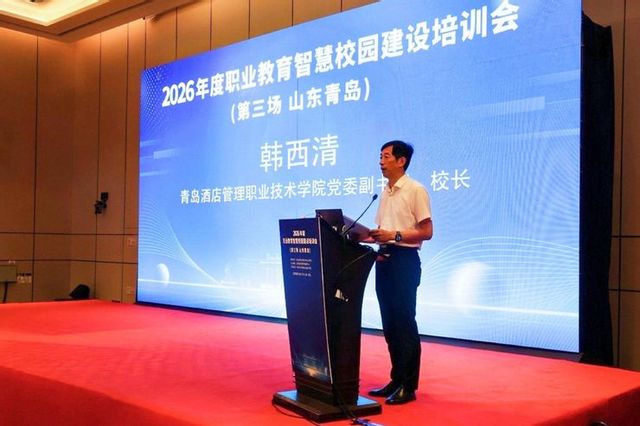
The 2026 Special Training Session on Smart Campus Construction for Vocational Colleges (Phase III) was held in Qingdao from August 19 to 21.
Guided by the Department of Vocational and Adult Education of the Ministry of Education, sponsored by the Educational Management Information Center of the Ministry of Education and undertaken by the college, the event attracted more than 330 representatives from 196 vocational colleges nationwide. The participants discussed new approaches and strategies for the digital transformation and upgrading of vocational education.
Aligned with the national strategy for digital education development, the training session featured policy interpretation, keynote speeches, case sharing, special seminars and field visits. It comprehensively reviewed the phased achievements of smart campus construction in vocational colleges, analyzed the current situation and future trends of the industry, and provided practical and replicable solutions for participating colleges to improve digital governance capacity and advance digital transformation through high-quality typical cases.
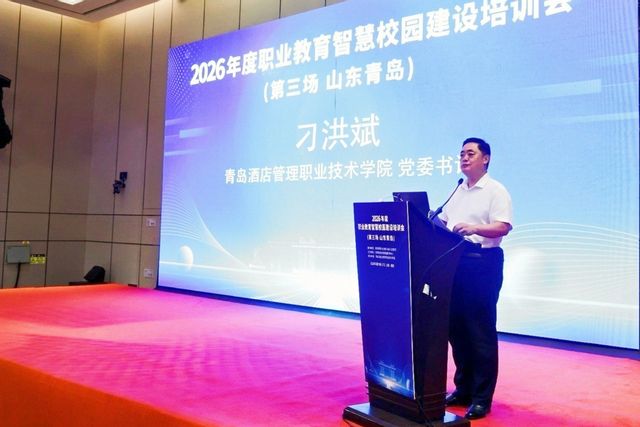
At the opening ceremony, Diao Hongbin, Secretary of the Party Committee of the college, delivered a speech. He briefly introduced the college’s school-running achievements and specialty development, and highlighted its progress in smart campus construction, including consolidating digital infrastructure, expanding AI application scenarios in teaching, building a blended teaching ecosystem, and improving teachers’ and students’ digital literacy. He stated that the college will follow the 15th Five-Year Plan, improve the multi-subject collaborative promotion mechanism under Party committee leadership, comply with national specifications for vocational college smart campus construction, deepen data governance and scenario innovation, strengthen industry-education integration, build an innovation platform for AI-enabled education, explore a new paradigm of “AI plus education”, and continuously elevate the college’s digital governance and school-running capacity.
The training invited a number of industry experts to deliver keynote speeches, sharing cutting-edge concepts and development ideas.
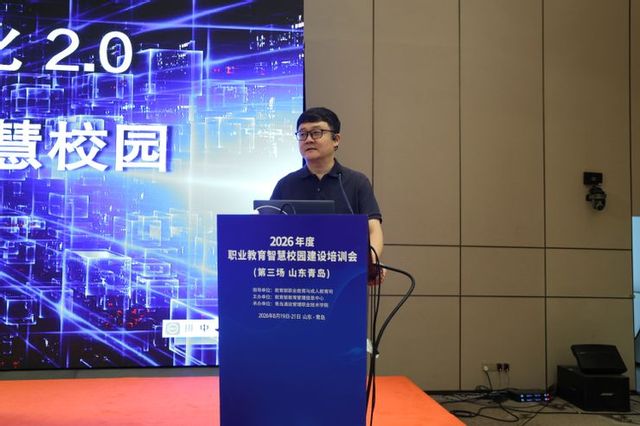
Zhang Peng, Director of the Public Platform Division of the Educational Management Information Center of the Ministry of Education, systematically interpreted the overall layout, progress and achievements of national smart campus construction and clarified key tasks for the next stage.
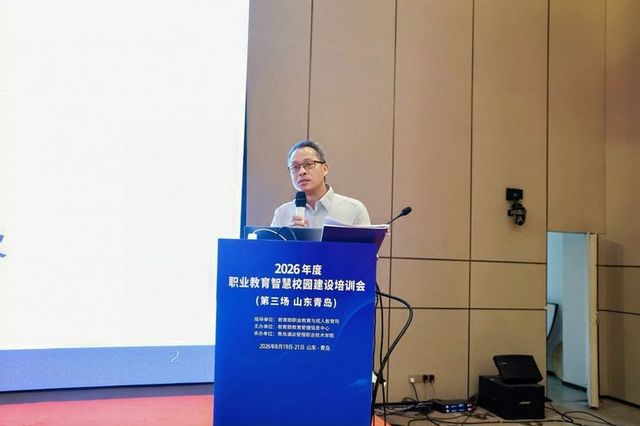
Wu Qiyue, Deputy Director of the Cybersecurity Division of the center, focused on emerging cybersecurity risks brought by the development of artificial intelligence, interpreted relevant laws and regulations, and put forward practical countermeasures in terms of mechanism improvement, public awareness education and emergency drills.
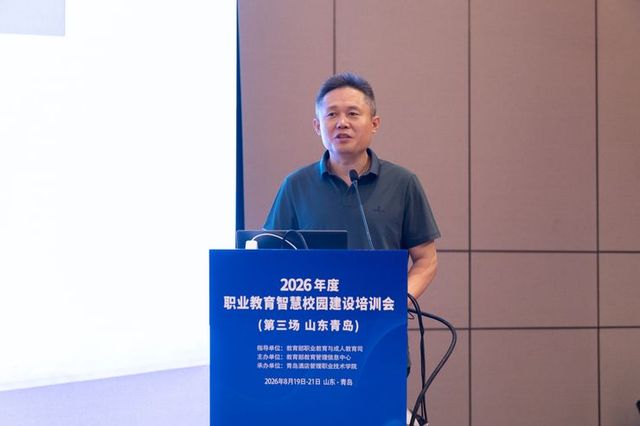
Three experts including Nie Wei from the Institute of Vocational and Continuing Education of the Chinese Academy of Educational Sciences, Zhou Qian from the Institute of Educational Technology of Tsinghua University, and Chang Zhi from the Smart Education Research Center of Higher Education Press delivered thematic reports. They respectively discussed the restructuring of the underlying logic of vocational education teaching, analyzed the development trends of national vocational college smart campuses based on monitoring data, and explored paths to build future-oriented training centers relying on the national vocational education smart education platform, providing solid theoretical support and practical guidance for vocational colleges’ teaching reform, smart campus development and intelligent upgrading of training modes.
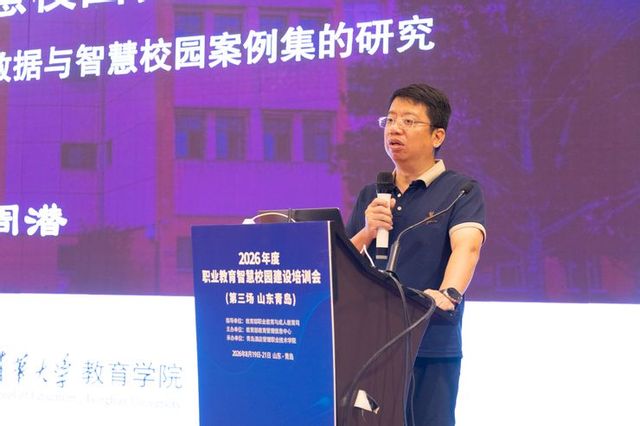
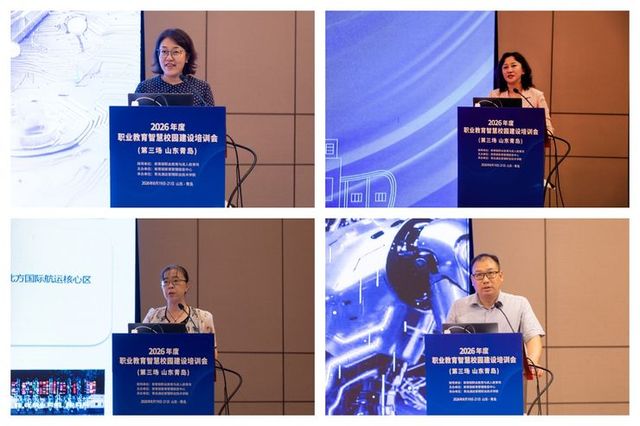
In addition, a special seminar on the pilot program of teachers’ teaching portfolios was held. Sun Qiurui, Deputy Director of the Informatization Construction Office of Beijing Normal University, shared the progress and achievements of relevant research projects, and participating experts and college representatives conducted in-depth exchanges on pilot construction work. In the case-sharing session, four colleges including Qingdao Technical College and Henan Polytechnic College presented distinctive practices in building intelligent teaching environments, realizing data-driven campus governance, and constructing digital platforms for industry-education integration, providing valuable and practical references for all participants.
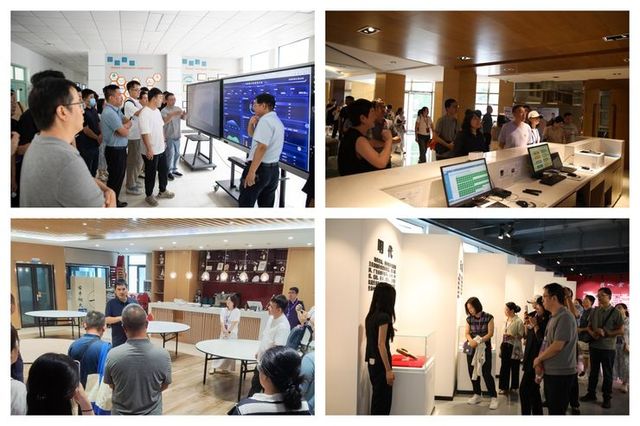
During the training, delegates visited the college’s digital transformation achievement exhibition to learn about the progress of high-quality development empowered by artificial intelligence. They also inspected on-site industry-education integration training bases including the Hismile Digital Hotel, the Production and Practice Center of the Culinary Institute, and the Pastry Mold Museum, experiencing in depth the in-depth integration of digital technology with education and teaching, training management and cultural inheritance.
Featuring rich content and pragmatic arrangements, the training session offered macro policy guidance, systematic methodological interpretation and practical grassroots cases, injecting new concepts and momentum into the smart campus construction of vocational colleges nationwide.
Participants stated that they would translate the training outcomes into practical digital reform measures at their respective institutions, accelerating the transformation of vocational education informatization from “application integration” to “innovation leadership”.