
Posted on Oct.1, 2026 by Dong Quanyue|Qingdao Vocational and Technical College of Hotel Management
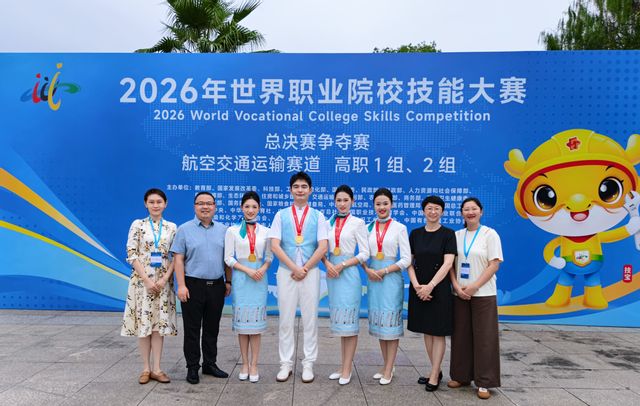
The final competition of the Aviation Transport Track (Higher Vocational Group) of the World Vocational Colleges Skills Competition 2026 took place from 26 to 30 September.
The team of our college—guided by Li Qian and Xu Shu of the School of Hospitality Management and comprising students Li Songyan, Liu Jiahang, Tang Jiayi and Yin Hanshuang—stood out to win the gold medal.
This marks a historic from zero to one breakthrough, as our college clinched gold in this track on its very first attempt, showcasing its strength in digital and intelligent training of aviation talents.
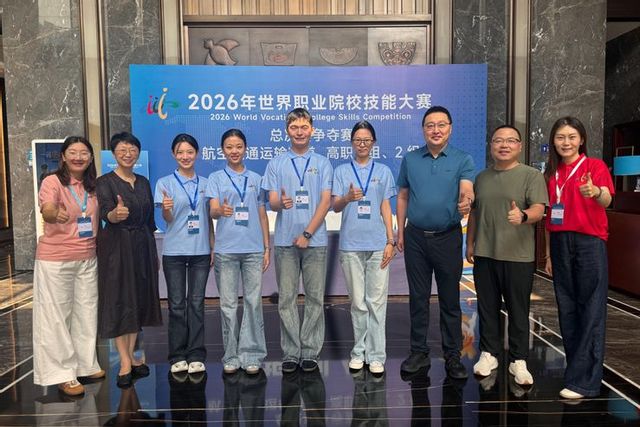
The track drew 158 teams and over 1,000 teachers and students nationwide, focusing on key fields such as air transport services, aircraft maintenance, aviation logistics and ground support. It comprehensively assessed contestants' on-site adaptability, application of intelligent services and precision support capabilities.
Upgraded from the National Vocational College Skills Competition and hosted by the Ministry of Education with multiple ministries, the event is a public-interest, international vocational education competition.
Guided by the industry–education integration philosophy of industry raising the question, college and enterprise answering together, and market grading the result, the team aligned with the demand for high-quality AI + civil aviation development.
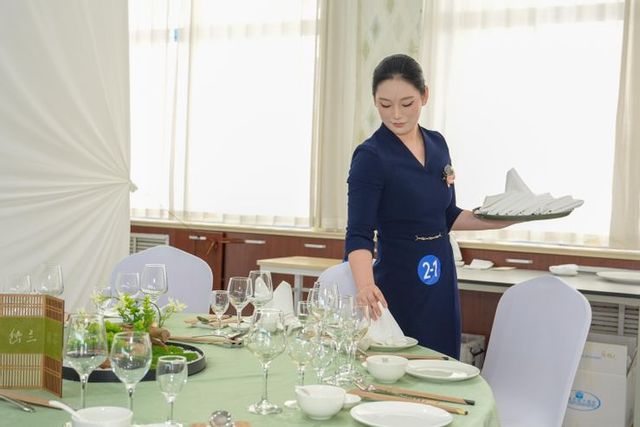
Based on the digital aviation service industry–education practice center built with airlines, and targeting pain points such as homogeneous services, insufficient intelligent applications and inadequate care for special passengers, they designed a differentiated service plan called Cloud Ridge Customs, Smart Air–Ground Enjoyment.
Driven by both technological empowerment and humanistic care, the project delivered innovations—including secondary development of embodied intelligent robots, big-data profiling of premium passengers, AI wine-taste matching and multi-sensory healing in first and business class—into real lounge and cabin scenarios.
New measures such as AI voice companionship and accessible meals enable visually impaired passengers to travel independently and with dignity, seamlessly connecting air and ground services.
Taking this award as a new starting point, the School of Hospitality Management will anchor on real industry needs, deepen industry–education integration, and integrate digital technologies into aviation service talent training to support the high-quality development of modern civil aviation and the regional economy.